Trust Wallet: A Full 1200-Word Guide (Completely New Content)
Trust Wallet is a mobile cryptocurrency wallet designed to give users a simple and secure way to store, manage, and interact with digital assets. Built as a self-custody wallet, it allows individuals to maintain full control over their private keys and access thousands of blockchain networks directly from their smartphone. Over the years, Trust Wallet has become popular for its ease of use, wide asset support, and built-in tools that help users explore decentralized applications. This guide explains Trust Wallet in clear and detailed terms, describing how it works, what features it offers, and why many people rely on it for managing their digital assets.
Understanding Trust Wallet
Trust Wallet is a non-custodial wallet. This means users—not a company—control the private keys that secure their digital assets. Private keys are stored locally on the device, and the app never has access to them. This design emphasizes personal control and independence. With Trust Wallet, individuals can send and receive assets, interact with decentralized apps, explore multiple blockchains, and store a broad variety of tokens in one place.
The wallet does not require users to create an account, share personal information, or sign up with email. Everything begins with generating a wallet inside the app, which produces a recovery phrase. This phrase is the only way to restore the wallet if the device is lost. While Trust Wallet is easy to use, securing the recovery phrase is extremely important.
Interface and User Experience
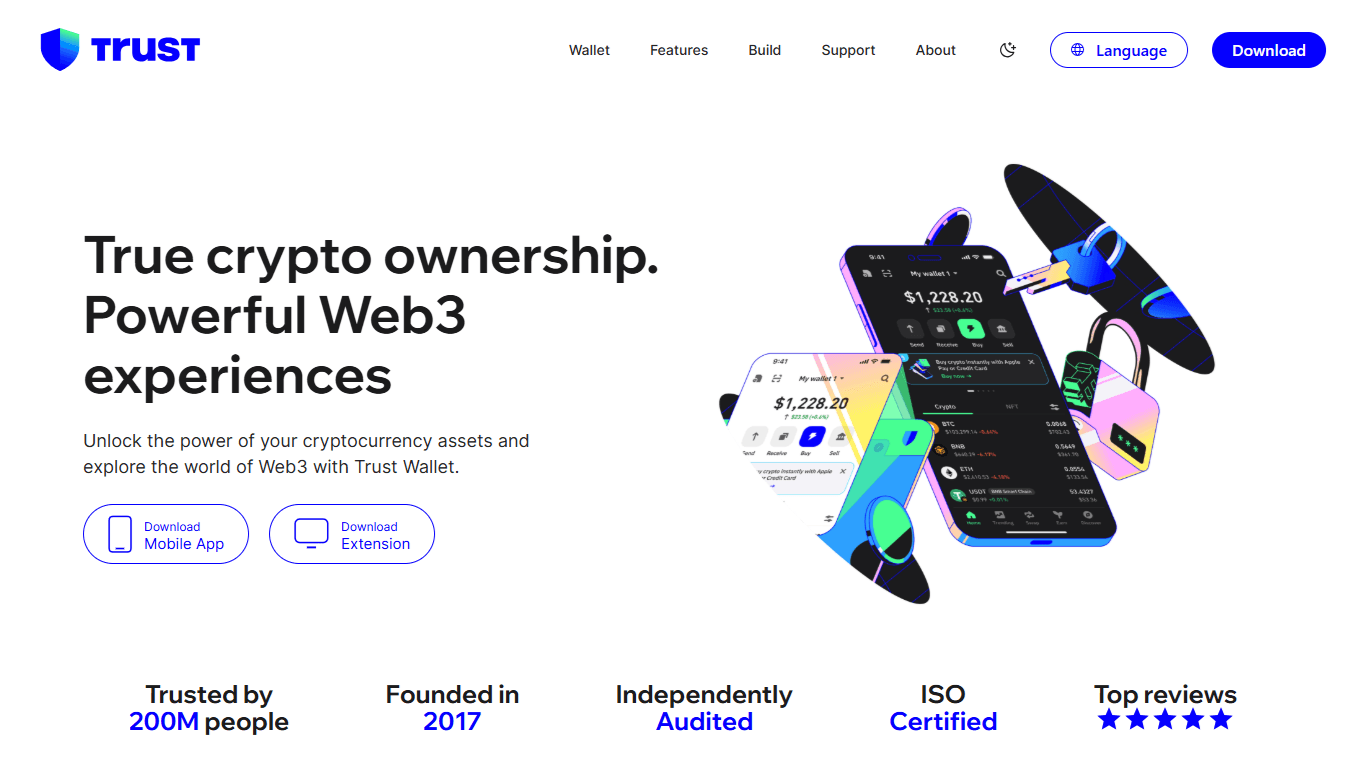
One of the main reasons Trust Wallet is widely adopted is its clean interface. The app uses a simple layout designed to help people find what they need without confusion. After opening the app, users see their main dashboard. It displays wallet balances, recent transactions, and shortcuts to essential features.
Home Screen Overview
The home screen shows:
A list of stored tokens
Total portfolio value
Options to send, receive, buy, or swap assets
A quick search function to add more tokens
Trust Wallet supports both major cryptos and small tokens, making it easy to organize asset collections.
Asset Details
Tapping on an individual token opens its own page. Here, users can view:
Balance
Transaction history
Market charts
Network explorer links
This section makes it simple to track activity for each asset.
Multi-Chain Support
Trust Wallet supports multiple blockchains, making it a versatile wallet. Instead of downloading a different app for each network, users can manage all of them in one place. Supported networks include:
Bitcoin
Ethereum
BNB Smart Chain
Polygon
Solana
Tron
Avalanche
And many more
The wallet also recognizes tokens that run on these networks. For example, Ethereum-based tokens (ERC-20, ERC-721, ERC-1155) appear automatically once the wallet detects them.
This broad support helps reduce complexity. Users can store NFTs, stablecoins, and thousands of other tokens in one unified space without switching between platforms.
Security Approach
Security is a core part of Trust Wallet’s design. Since it is a self-custody wallet, the user is always in charge of keeping their recovery phrase safe. Trust Wallet itself cannot access wallets, reset passwords, or retrieve private keys. This approach increases user independence but also increases responsibility.
Security features include:
Local device storage for keys
Encryption tools built into the device
Biometric login (optional) such as fingerprint or face unlock
No central servers storing wallet data
These layers help maintain control. Even if the app is deleted, the wallet can be restored on another device using the recovery phrase.
Sending and Receiving Digital Assets
Trust Wallet makes sending and receiving assets straightforward. To receive funds, users tap the “Receive” button, choose the asset they want, and share the address. Each network has its own address format, so selecting the correct one is important.
To send assets, users enter the recipient’s address, select an amount, choose a network fee (if applicable), and confirm the transaction. The app then processes the request through the chosen blockchain. Transaction time depends on network conditions and the asset being transferred.
Trust Wallet includes clear warnings and reminders about using correct networks to help prevent errors.
Using the Built-In DApp Browser
One of Trust Wallet’s distinguishing features is the integrated Web3 browser (in regions where it is available). This browser allows users to access decentralized applications directly from the wallet. Through the DApp browser, people can explore:
Decentralized exchanges
NFT marketplaces
Blockchain games
DeFi platforms
Staking dashboards
By connecting the wallet to these applications, users can interact with smart contracts securely. Since Trust Wallet controls the private keys, users must approve each action inside the app before it goes through.
This setup allows users to explore the growing world of decentralized technology without switching between multiple tools.
Swapping and Exchanging Assets
Trust Wallet provides built-in swap tools that allow users to exchange certain assets directly in the app. Swaps occur through decentralized protocols, meaning no centralized service controls the process.
The swap tool supports many token pairs, especially those on networks like Ethereum and BNB Smart Chain. Users choose the token they want to convert, enter an amount, and confirm the exchange. Swapping provides a convenient way to trade without leaving the wallet interface.
While useful, swap functionality depends on network liquidity and fees, which can affect the final result.
Purchasing Crypto Through Third-Party Providers
Trust Wallet includes options to purchase certain cryptocurrencies using third-party services. These providers vary depending on region. Trust Wallet does not sell crypto directly; instead, it connects users to external partners. The app simply provides a streamlined method to start the process.
This option helps beginners acquire assets for the first time. However, the process may involve local regulations, verification steps, or payment requirements that vary by region.
Managing NFTs
Trust Wallet also supports NFTs from compatible networks. Users can:
View NFT collections
Access NFT details
Send NFTs to other wallets
Connect to NFT marketplaces through the DApp browser
NFTs appear visually inside the app, making it easy to organize collectibles. The wallet tracks both traditional tokens and digital artwork in one unified space.
Notifications and Activity Tracking
The app includes activity logs that show all transactions associated with the wallet. Users can review:
Sent transactions
Received payments
Smart contract interactions
Swap history
DApp actions
Notifications help users stay aware of changes or activity involving their wallet. This adds a layer of awareness and helps keep track of movement across multiple networks.
Why People Choose Trust Wallet
Trust Wallet has grown in popularity because it offers a simple, secure, and flexible environment for managing digital assets. Key reasons people choose it include:
Mobile convenience: Everything is accessible through a smartphone.
Self-custody control: Users keep their own keys.
Wide asset support: Thousands of tokens and networks work with the wallet.
DApp integration: Users can explore decentralized technology directly.
Clean interface: Simple layout that’s beginner-friendly.
Open-source roots: Many wallet components are community-reviewed.
The combination of convenience, independence, and broad support makes Trust Wallet a dependable tool for navigating the digital-asset space.
Conclusion
Trust Wallet is designed to be a powerful yet easy-to-use platform for managing digital assets. By providing multi-chain support, a secure self-custody structure, integrated DApp access, and a user-friendly interface, it gives individuals a strong foundation for exploring blockchain technology. While users must be responsible for protecting their recovery phrase and understanding how blockchain networks work, Trust Wallet offers the tools needed to interact safely and confidently in the evolving world of digital assets.